

Nombela-Arrieta Group
Bone Marrow Microenvironment │ Hematopoiesis │ 3D Quantitative Microscopy
Current Projects
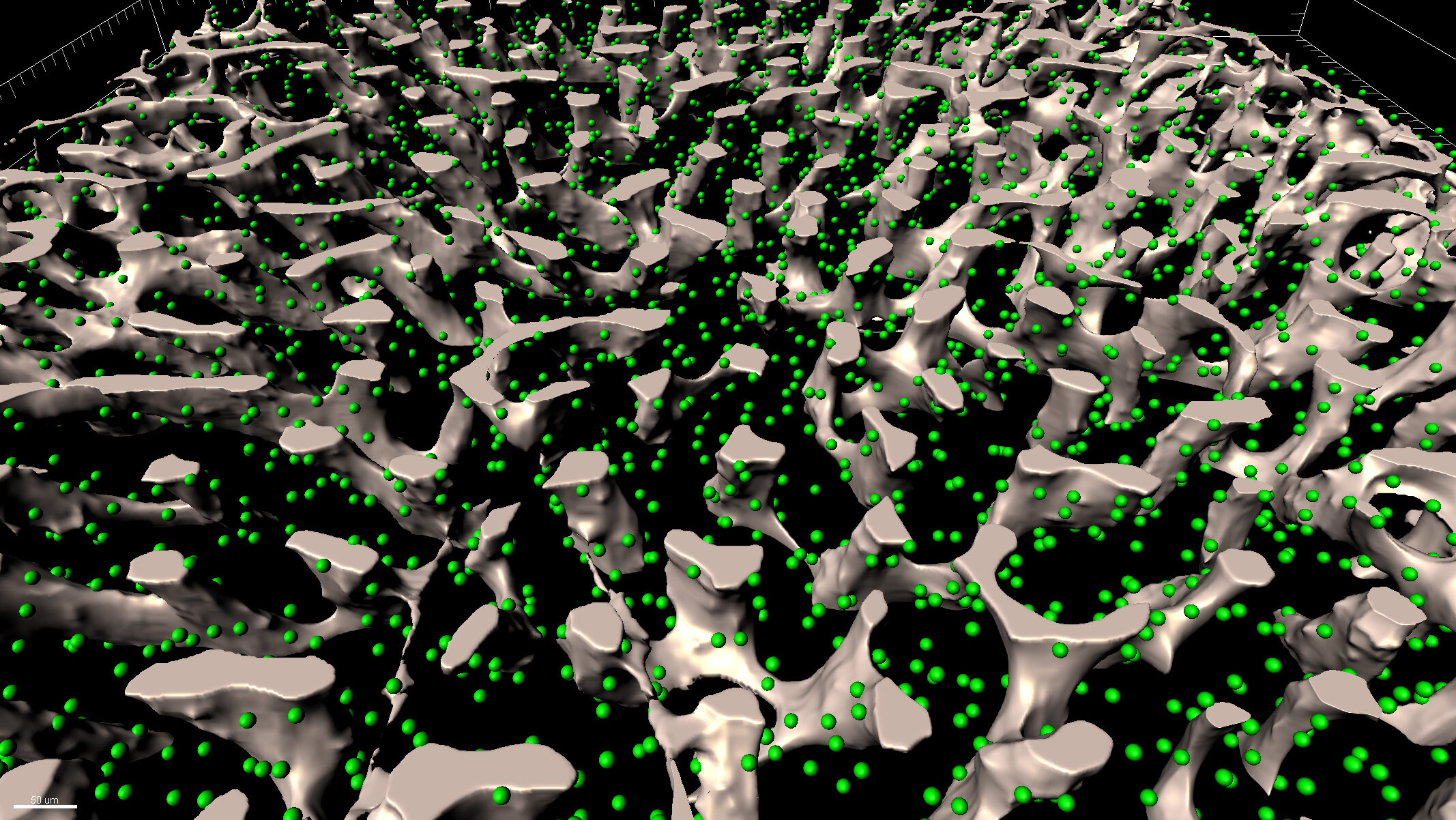
Functional 3D organization of hematopoietic tissues
Proper maintenance of complex multicellular tissues depends both on the types and numbers of cells that form them, and on their assembly into unique structural configurations. Structure and function are thus highly intertwined. We are interested in dissecting the cellular diversity of the stromal compartment and the functional interactions established with hematopoietic cells within native microenvironments. To perform these studies we take advantage of state of the art microscopy technologies implemented in our laboratory, which enable the three-dimensional organ-wide imaging hematopoietic tissues at subcellular resolution (Gomariz et al, Nat. Comms. 2018). We further employ spatial statistics to investigate whether spatial associations are significant and therefore indicative of functional interactions. We combine these technologies with sc-RNAseq and functional assays to gain a deeper understanding of the functional organization of BM tissues.
Immune cell-stromal crosstalk in infections, inflammation and ageing
One major goals of our research is to ultimately understand how the structural and functional integrity of the bone marrow is fundamentally altered in pathological conditions. We study whether structural defects affect tissue organization, disrupt cellular interactions and therefore promote a decline in the specialized niche function of the marrow. Inflammation results in a profound rewiring of hematopoietic circuits as well as qualitative and quantitative shifts in mature cell production. We are addressing how infections, inflammatory insults and homeostatic aging fundamentally reshape BM stroma. Our recent work revealed that chronic viral infections lead to the prominent destruction and functional impairment of mesenchymal stromal networks, thereby resulting in a long-lasting functional decline of HSCs (Isringhausen S, Mun Y et al. Journal of Experimental Medicine, 2021). We have also hexplored the structural and transcriptomic reprogramming that BM stromal subsets undergo during ageing and how these relate to the emergence of a proinflammatory milieu (Helbling et al. Cell Reports, 2020).
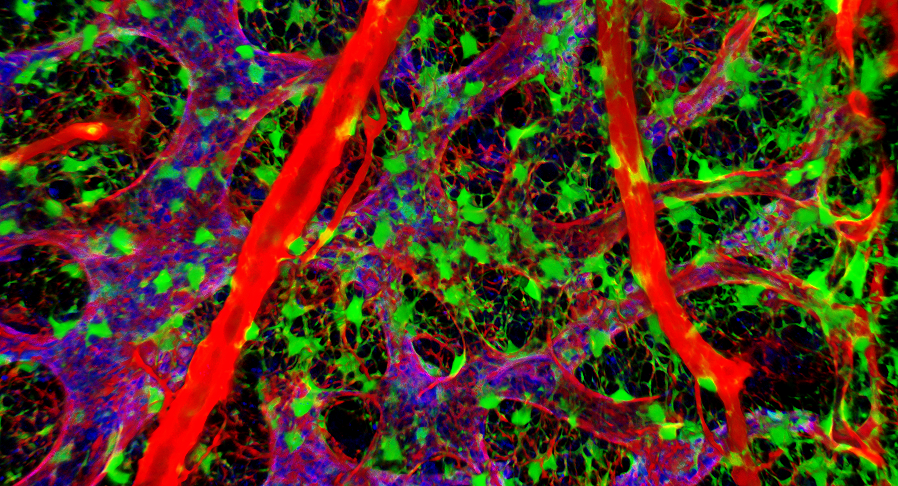
Role of BM stromal infrastructures in hematological malignancies
Numerous studies have shown that stromal cells actively contribute to the initiation and development of hematological neoplasias. Different leukemias remodel the BM ecosystem in varying ways, specifically targeting the stromal compartment and subverting its function to favor leukemic growth. we are employing advanced experimental models of Acute Myeloid Leukemia (AML) to track the spatiotemporal dynamics of cancer emergence and progression in the BM, and analyze the sequential effects in the structure and composition of the BM stromal landscape. In addition, we apply 3D quantitative imaging and sc-RNA seq to study compositional, functional and structural remodeling of the BM stromal infrastructure in patients with AML.
Niche control of hematopoietic stem cell proliferative dynamics
During development the hematopoietic potential transits through different embryonic organs, in adulthood hematopoiesis settles in the marrow cavities of bones. Exposure to the different microenvironments is proposed to modulate the properties of hematopoietic stem cells (HSCs) and shape hematopoietic output. Through the use of imaging techniques, genetically modified mouse models and global analyses of gene expression we aim to characterize the different stromal cell types found in fetal liver and spleen, and define the molecular mechanisms by which the participate in hematopoietic regulation.